








A successful migration to a new security platform depends on thorough preparation, a clear governance framework, and ongoing monitoring to prevent security breaches and false alarms
1. Preparation and Governance (Upstream)
- Establish the framework: Set the rules for security, access management, permissions, and data retention from the outset.
- Verify the current status: Check that there are no unresolved security alerts or false positives on the legacy infrastructure.
- Test the hardware and software: Verify that the firewalls, EDR, antivirus software, and sensors are functioning properly before starting.
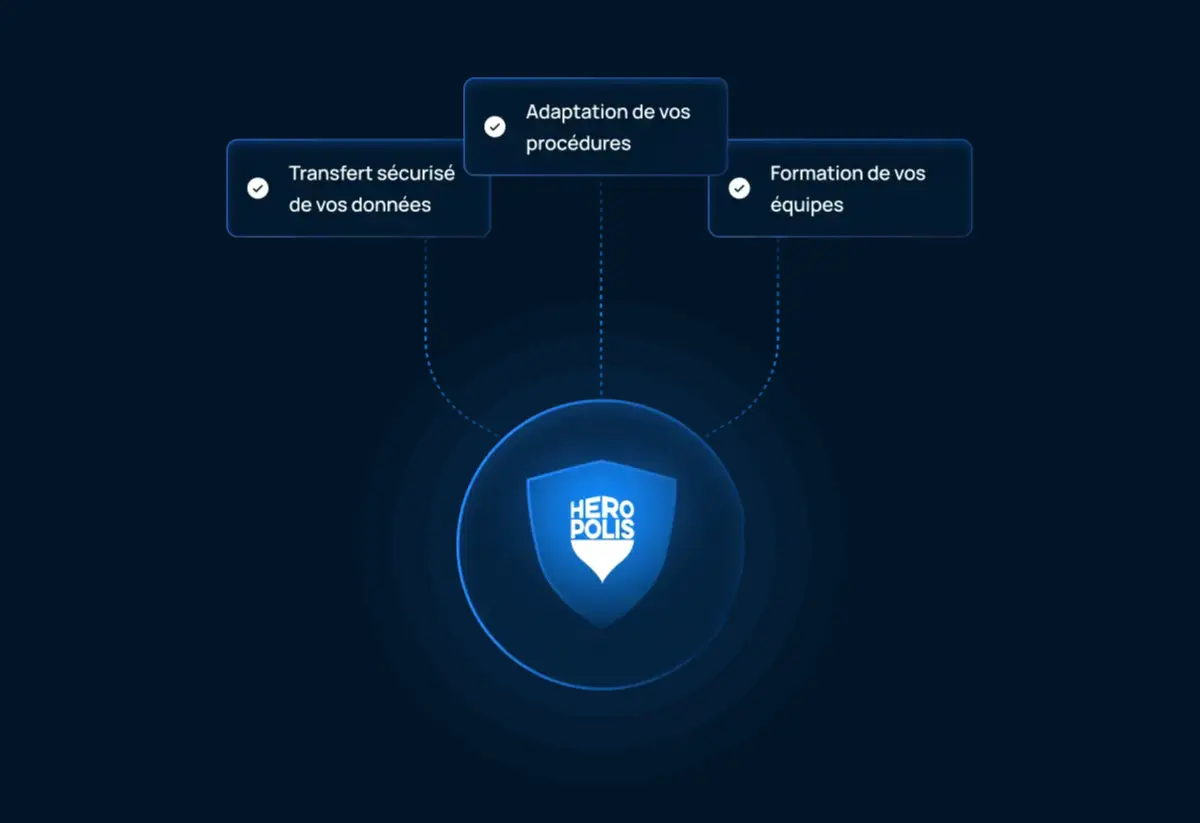
- Update procedures: Rewrite the response processes (particularly for non-business hours) and do not initiate the switchover until these rules have been tested and validated
2. Data and Configuration Management
- Automate to Secure: Use the new platform's automation features to reduce the risk of human configuration errors.
- Backup: Perform a complete, isolated backup of critical data and configurations before any transfer.
3. Monitoring and Auditing (Post-Migration)
- Conduct an audit: Immediately identify any remaining gaps or vulnerabilities after the switchover and implement countermeasures
- Continuous Monitoring: Monitor performance indicators (KPIs) and event logs to ensure service continuity.
- Training Teams: Provide guidance and training to employees on the specific features and interfaces of the new solution.
Switch solutions without interrupting your operations with Heropolis